


Quiet Luxury, Loud Craftsmanship: The Men's Accessories Philosophy for 2026
What Quiet Luxury Actually Means
The term "quiet luxury" has been circulating for a few years now, often diluted into a vague synonym for "expensive but plain." That's a misreading. Quiet luxury isn't about the absence of style. It's about the presence of intention.
As Ayerhs Magazine declared, 2026 is the year of quiet power dressing. Baoxiniao's trend report puts it precisely: at the heart of quiet luxury men's fashion is restraint. Instead of shouting wealth with logos, the style communicates status through detail, fit, and material.
This distinction matters because it reframes the entire conversation around men's accessories. In a quiet luxury framework, an accessory isn't decoration. It's evidence — of taste, of attention, of a man who has moved beyond dressing to impress and arrived at dressing with purpose.
The End of Logo Culture
How We Got Here
The past decade was dominated by logo-heavy luxury. Monogram prints, oversized branding, and the conspicuous display of designer names served as a visual shorthand for status. It worked — until everyone started doing it. When logo luxury became accessible through diffusion lines, outlet stores, and the secondhand market, its signal value collapsed.
The men who once wore logos to communicate success discovered that the message was no longer exclusive. And so the language changed.
What Replaced It
What emerged in its place is a system of signals that requires more knowledge to read. The quality of a fabric. The precision of a seam. The weight of a button. The subtle sophistication of a cufflink that was clearly made by hand rather than stamped by a machine.
Martin Dingman's 2026 style analysis notes that men are returning to a smaller number of curated pieces built to last. MR PORTER's quiet luxury edit frames it as choosing quality over quantity and embracing personal style that transcends trends.
This is the environment in which accessories have become more important, not less. When the suit is understated and the shirt is unadorned, the cufflink becomes the focal point. It carries the entire burden of individual expression.
Why Cufflinks Are the Quintessential Quiet Luxury Accessory
They Operate on a Need-to-Know Basis
A watch is visible from across a room. A ring catches light with every gesture. But cufflinks operate in closer quarters. They're noticed in handshakes, across dinner tables, during conversations. They reveal themselves to the people who are actually paying attention — which is exactly the audience that quiet luxury is designed for.
This selective visibility is what makes cufflinks different from other accessories. They don't broadcast. They confide.
Craftsmanship Is Legible Up Close
The quiet luxury movement depends on materials and making being appreciable at close range. A handmade cufflink rewards proximity. You can see the irregularities that prove a human hand was involved. You can feel the weight of quality materials. You can notice the finish — brushed, hammered, oxidized — that communicates a maker's specific choices.
Mass-produced cufflinks, regardless of the brand name stamped on them, lack this legibility. They look correct from a distance but reveal nothing up close. In a world that now values evidence of craft over evidence of expenditure, that's a critical distinction.
They Require a Deliberate Choice
You don't accidentally wear cufflinks. They require a French cuff shirt, which itself is a deliberate wardrobe choice. Then they require selection — which pair, for which occasion, with which outfit. Every step in the process is intentional.
This layered intentionality is the essence of quiet luxury. Nothing is default. Nothing is passive. Every element communicates that the wearer has made a series of considered decisions, and is confident enough not to explain them.
The Handmade Difference
Why Factory Luxury Falls Short
The luxury market has a paradox at its center: most "luxury" goods are produced in factories, at scale, using industrial processes. The luxury designation comes from the brand name, the retail environment, and the price point — not from the object itself. A $300 pair of machine-made cufflinks from a heritage brand is functionally identical to thousands of other pairs bearing the same design.
Quiet luxury exposes this paradox. When the goal is genuine quality and individual character rather than brand recognition, the factory model falls short. What you need is a maker.
What Handmade Means in Practice
A handmade cufflink is produced by an artisan — sometimes a single person, sometimes a small workshop — using techniques that cannot be fully automated. The materials are selected individually. The shaping, finishing, and assembly involve human judgment at every stage. The result is a piece that carries the maker's hand in its very form.
This isn't about romanticism. It's about physics. A handmade object has physical properties — surface texture, weight distribution, finish variation — that a machine cannot replicate. These properties are what make an accessory feel luxurious in the hand, not just look luxurious in a photograph.
Uniqueness as a Value Proposition
In a marketplace saturated with identical goods, uniqueness has become genuinely scarce. When you purchase a handmade pair of cufflinks, you're acquiring something that doesn't have an exact duplicate anywhere in the world. Minor variations in material, finish, and form ensure that each pair is, in the most literal sense, one of a kind.
For the man who has internalized quiet luxury as a philosophy, this uniqueness isn't just aesthetically pleasing. It's philosophically aligned. He doesn't want what everyone else has. He wants what only he has.
Building a Quiet Luxury Accessories Collection
Start With Versatility
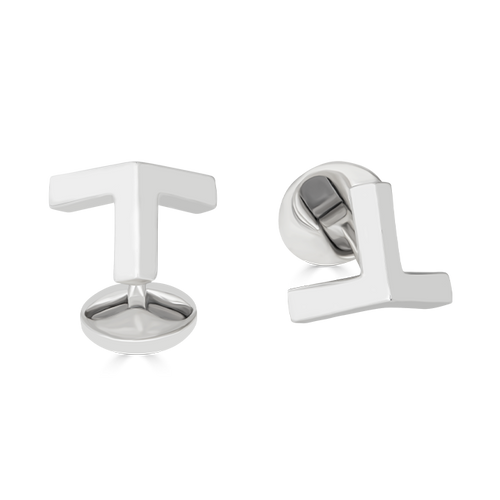
Your first pair of quality cufflinks should work across the widest range of contexts. A silver-toned pair with clean lines and visible craftsmanship — perhaps a brushed finish or subtle texture — serves boardrooms, weddings, dinners, and everything in between. This is your foundation.
Add Character
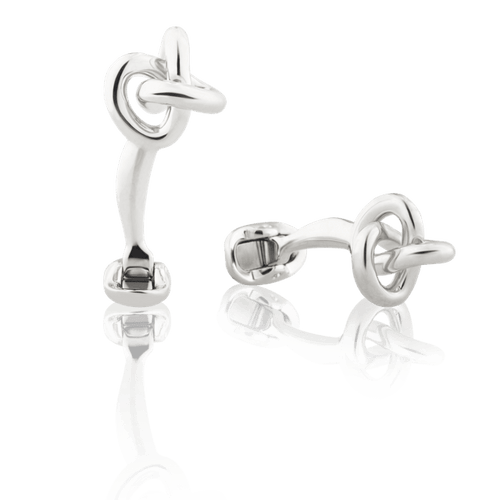
Your second pair should express something more specific about your taste. An unusual material combination. A design that references something meaningful to you — architecture, nature, geometry, a place you've been. This is the pair that starts conversations, but only with people perceptive enough to notice.
Invest in a Statement
Every collection benefits from one piece that's unapologetically distinctive. Not loud — there's a difference. A statement cufflink is one with enough character to anchor an entire outfit. It might be the only accessory you wear that evening, and it's enough.
Maintain Restraint
The quiet luxury principle applies to collection-building, too. Five exceptional pairs of cufflinks, each with genuine craftsmanship and distinct character, are infinitely more valuable than a drawer full of mass-produced options. Collect slowly. Choose carefully. Let each acquisition be deliberate.
The 2026 Color and Material Palette
This season's menswear palette — navy, charcoal, cream, olive, and the newly prominent oxblood — provides rich terrain for cufflink selection. Warm metals (gold, brass, bronze) complement the season's earth tones. Cool metals (silver, platinum, steel) anchor the blues and grays. Mixed materials — metal with stone, wood, or enamel — bridge both palettes.
The texture story is equally important. As Numero magazine observed, the current season is built on tactile richness — mohair, cashmere, brushed wool, suede. Cufflinks that echo this textural sensibility, through hammered surfaces or matte finishes, feel more contemporary than high-polish designs.
FAQ
What is quiet luxury in men's fashion?
Quiet luxury is a style philosophy that communicates quality and taste through materials, craftsmanship, and fit rather than logos or brand recognition. In 2026, it emphasizes intentional dressing — choosing fewer, better pieces that reflect personal style. For accessories, this means prioritizing handmade or artisan-crafted items over mass-produced designer goods.
Are cufflinks still relevant in 2026?
Cufflinks are more relevant in 2026 than they've been in years. The return to formal dressing, the quiet luxury movement, and the broader emphasis on intentional accessories have made cufflinks a defining element of modern men's style. They represent exactly the kind of considered, quality-driven detail that the current fashion moment values.
What's the difference between handmade and designer cufflinks?
Designer cufflinks are typically factory-produced at scale under a luxury brand name — the value comes primarily from brand recognition. Handmade cufflinks are crafted individually by artisans, resulting in pieces with unique character, superior tactile quality, and genuine scarcity. In the quiet luxury framework, handmade pieces align more closely with the movement's values of craft over brand.
How do I incorporate quiet luxury into my accessories?
Start by replacing logo-driven accessories with pieces chosen for their material quality and craftsmanship. Invest in one excellent pair of cufflinks rather than several mediocre ones. Choose items that feel substantial in hand and show evidence of thoughtful making. Coordinate rather than match — aim for a cohesive sensibility across your accessories rather than identical metals or styles.
How many pairs of cufflinks should a man own?
Quality over quantity is the guiding principle. Three to five pairs cover most needs: one versatile everyday pair, one or two with more personality for social occasions, and one statement pair for special events. The goal is a curated collection where every pair earns its place, not a drawer of accumulated clutter.
Internal linking suggestions: Link to Fils Unique's handmade cufflinks collection, the brand story/craftsmanship page, and any collection filtered by material or style.
To see what quiet luxury looks like when it's held in your hand — handmade, singular, and crafted with purpose — explore the collection at filsunique.com.

Leave a comment